Vincent De Pio: The Beauty of Impermanence
In The Beauty of Impermanence, Vincent De Pio presents a body of work that functions as both personal elegy and aesthetic inquiry into the transient nature of existence. Anchored in his tender introspections, the exhibition explores the impermanence of memory, identity, and emotional states through an expressive use of color and form. Rather than seeking to preserve or immortalize the past, De Pio embraces its inevitable dissolution, framing this ephemerality not as a source of despair but as a vital condition of beauty.
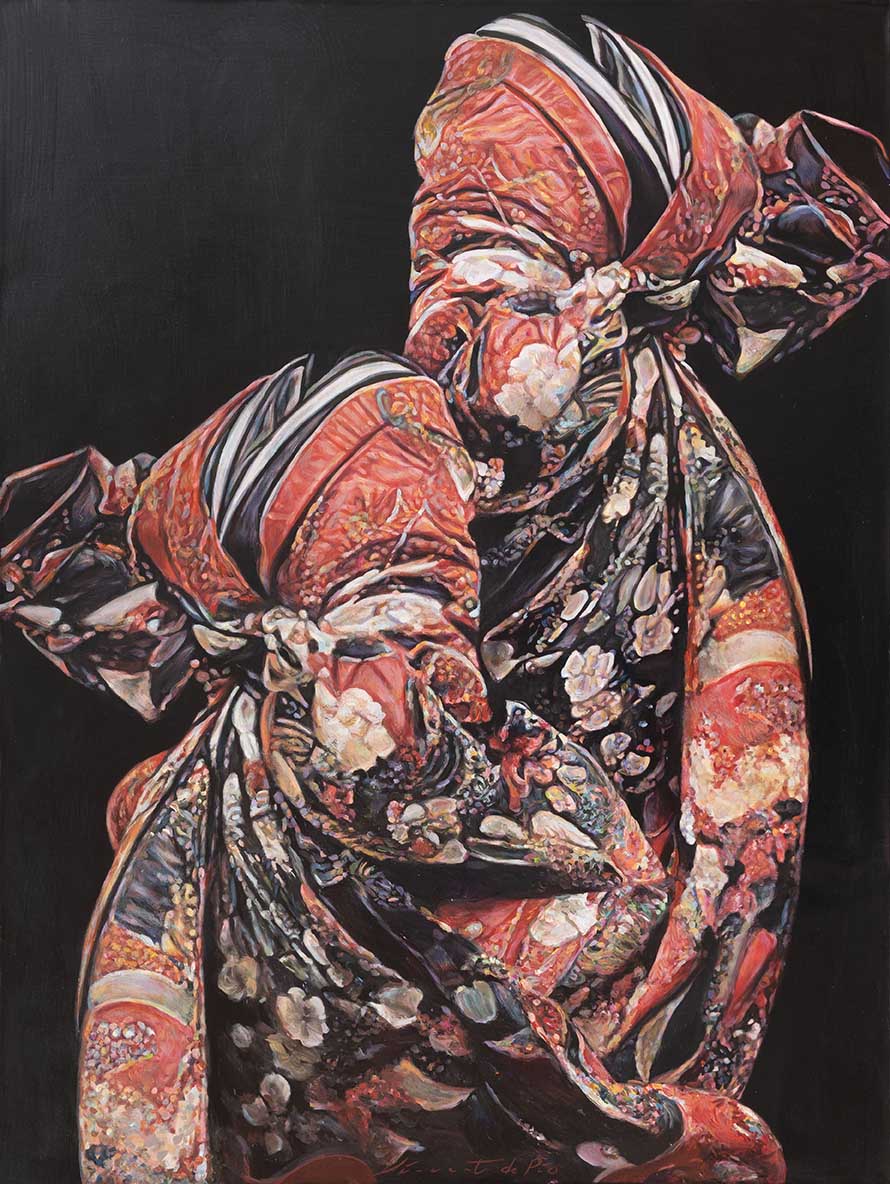
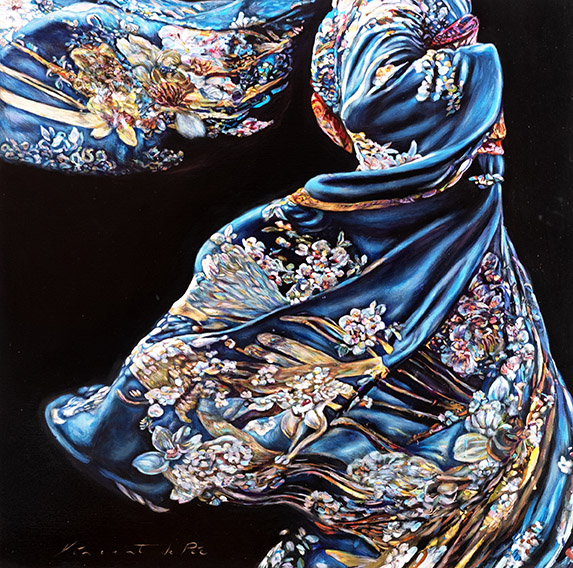
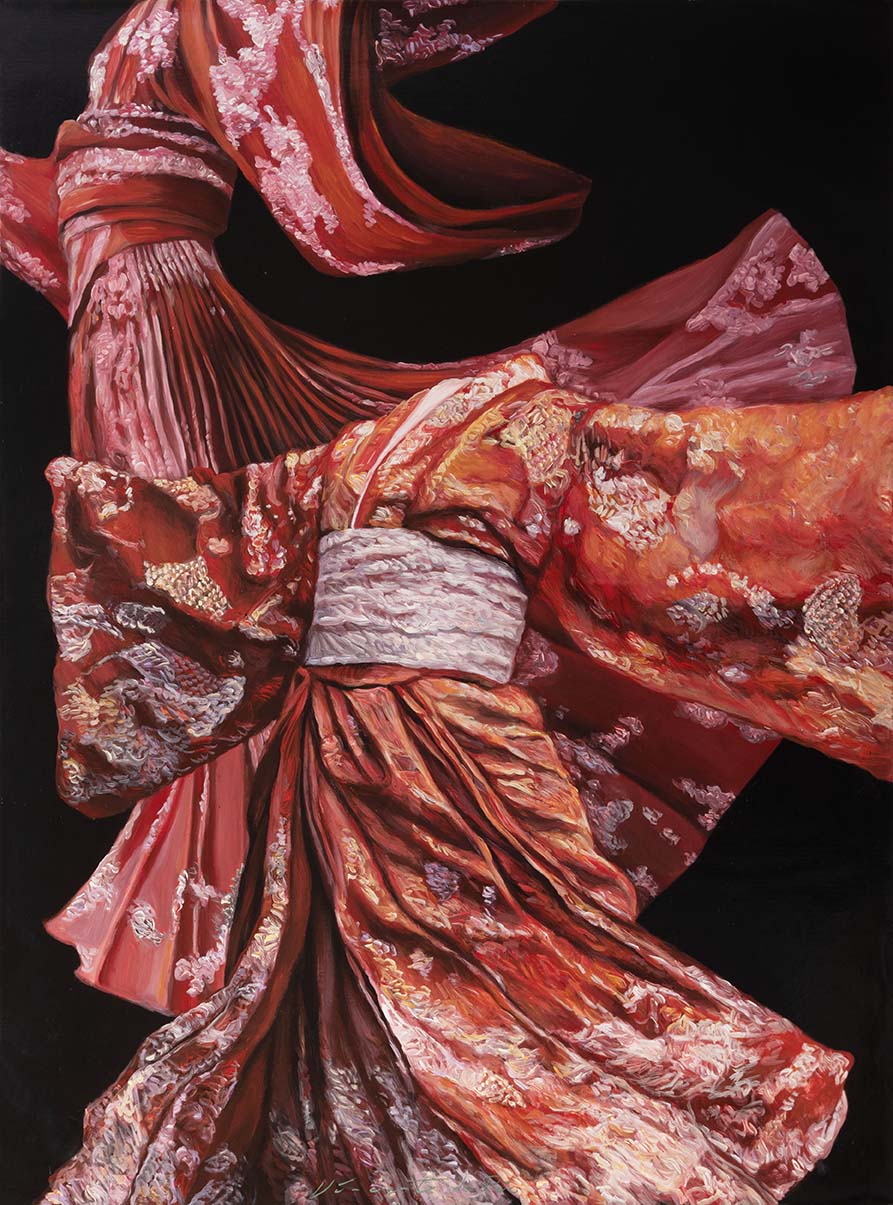
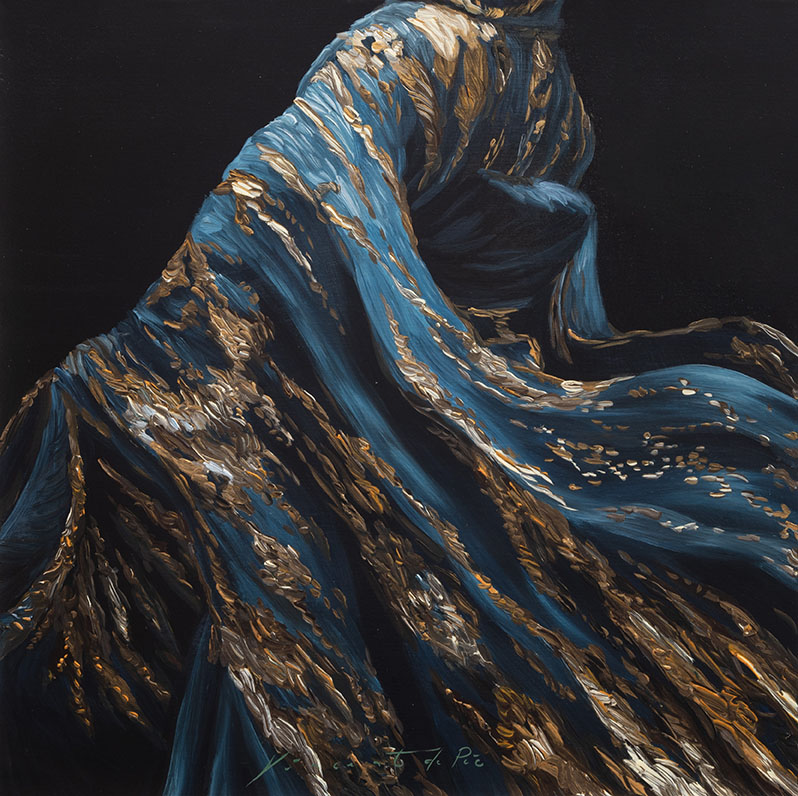
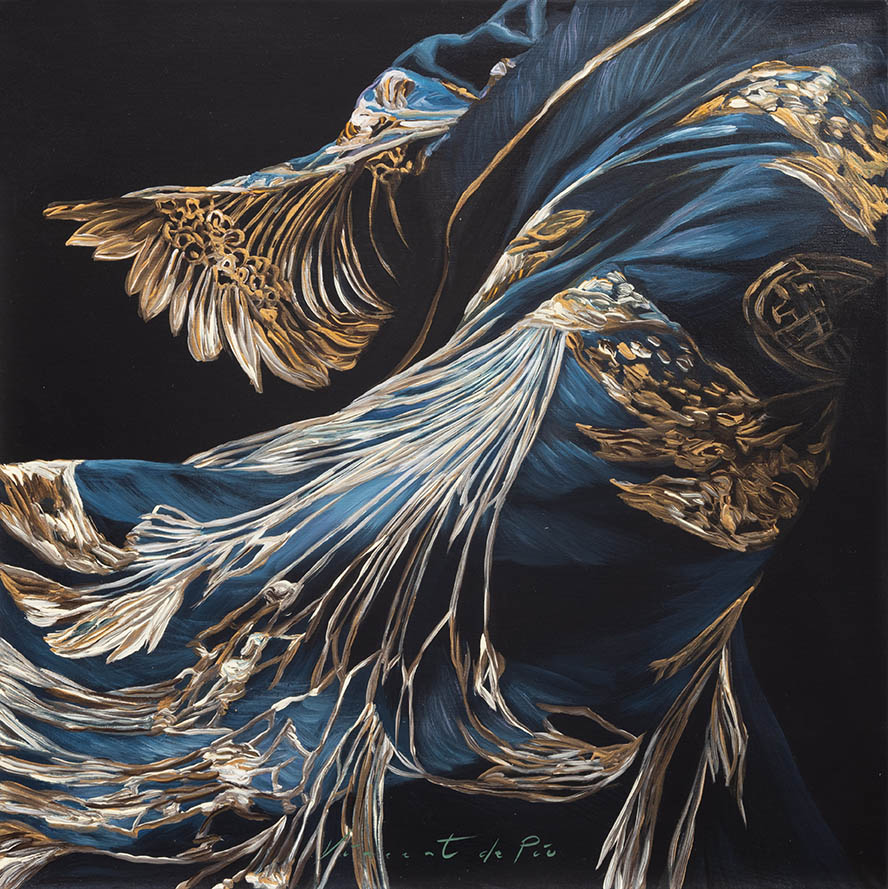
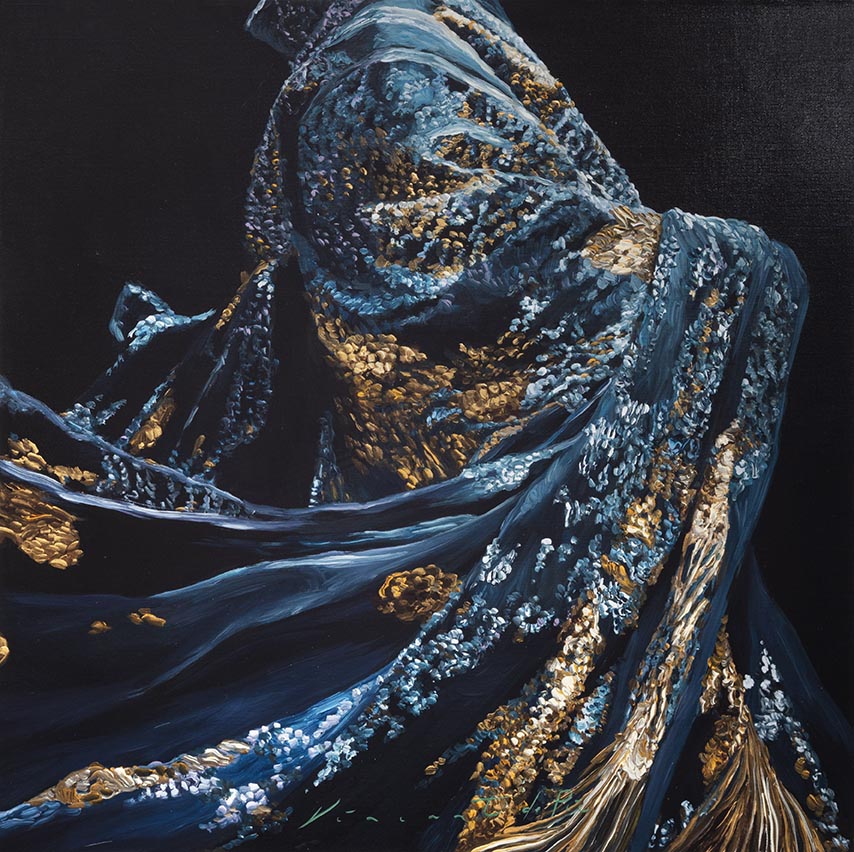
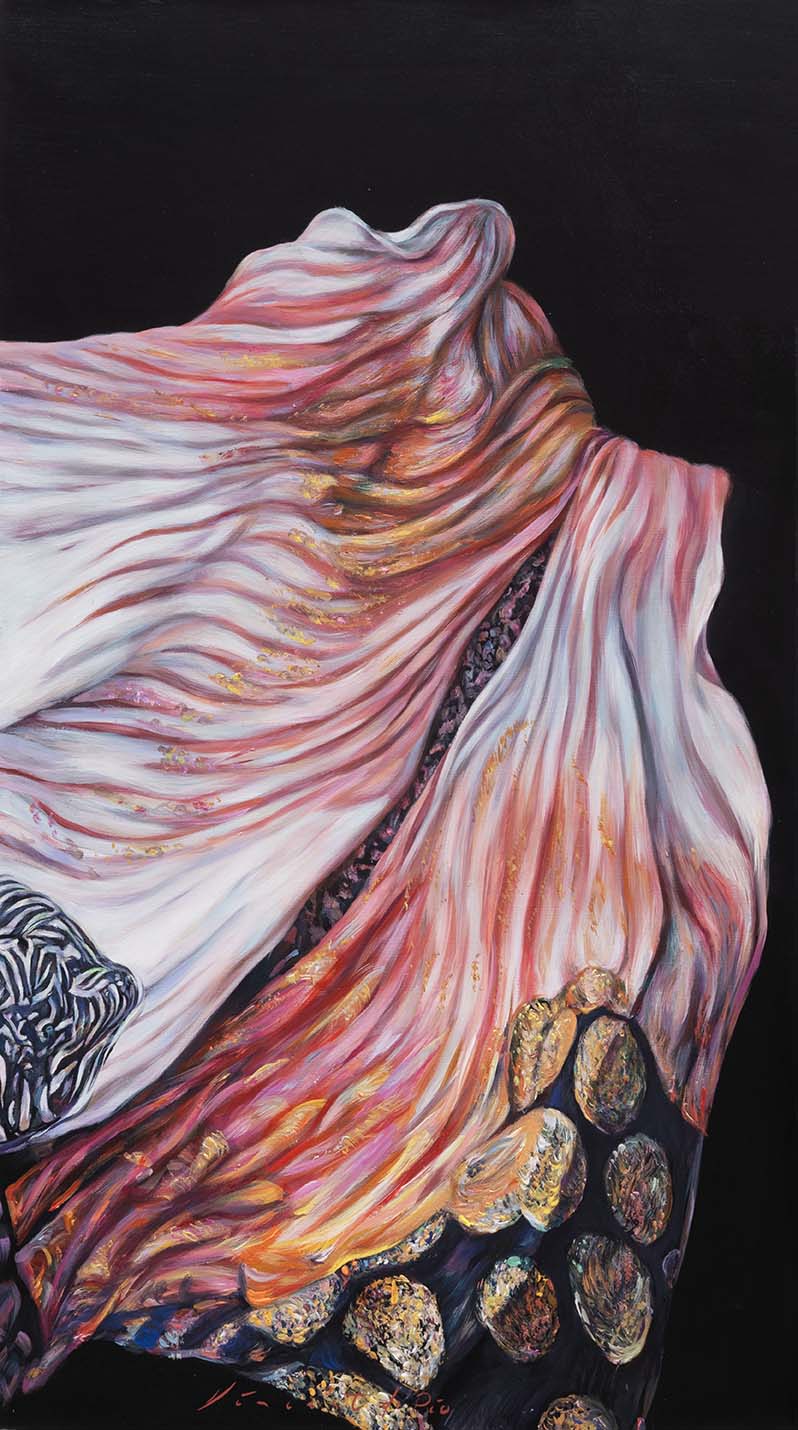
This visual language finds form in his recurring motif of embroidered kimonos, rendered with painstaking attention to detail. Their folds, movements, and decorative surfaces serve as conduits of emotion and metaphor. In works such as Baransu to Nigen-Sei (Balance and Duality) and Choetsu-Sei (Transcendence), the garments seem to hover in mid-motion—caught between presence and disappearance, intimacy and distance. De Pio's manipulation of form and negative space heightens this ambiguity, allowing figuration to verge on abstraction.
The absence of clearly defined faces or figures situates the viewer in a contemplative space, underscoring the fragility of memory and the fading contours of personal history. De Pio’s work transcends the literal and moves toward the phenomenological—suggesting not how things look, but how they are remembered and emotionally processed. His compositions, layered with meaning and gesture, become visual meditations on the evolving self.
What remains most affecting about The Beauty of Impermanence is not its virtuosic command of technique, but its quiet insistence on the poignancy of the passing moment. De Pio does not attempt to arrest time; rather, he makes space for it to breathe. In the folds of embroidered fabric, in the glint of gold against darkened silk, in the near-absence of the human face, we are offered glimpses of memory in its most fragile, most luminous state. These are not simply paintings, but elegies for things half-remembered and emotions too large for words. And in this, De Pio achieves something rare: the transformation of personal recollection into a shared, visual poetics of impermanence.
Ultimately, The Beauty of Impermanence offers a compelling meditation on the temporality of human experience. Through painterly abstraction and emotive chromatics, De Pio constructs a visual language that acknowledges loss while affirming the poetic richness of transience. In doing so, he not only reflects on his own personal history but also gestures toward a universal condition—the inevitability of change and the quiet dignity of letting go.