Aubrey Caabay: Topographies of Becoming
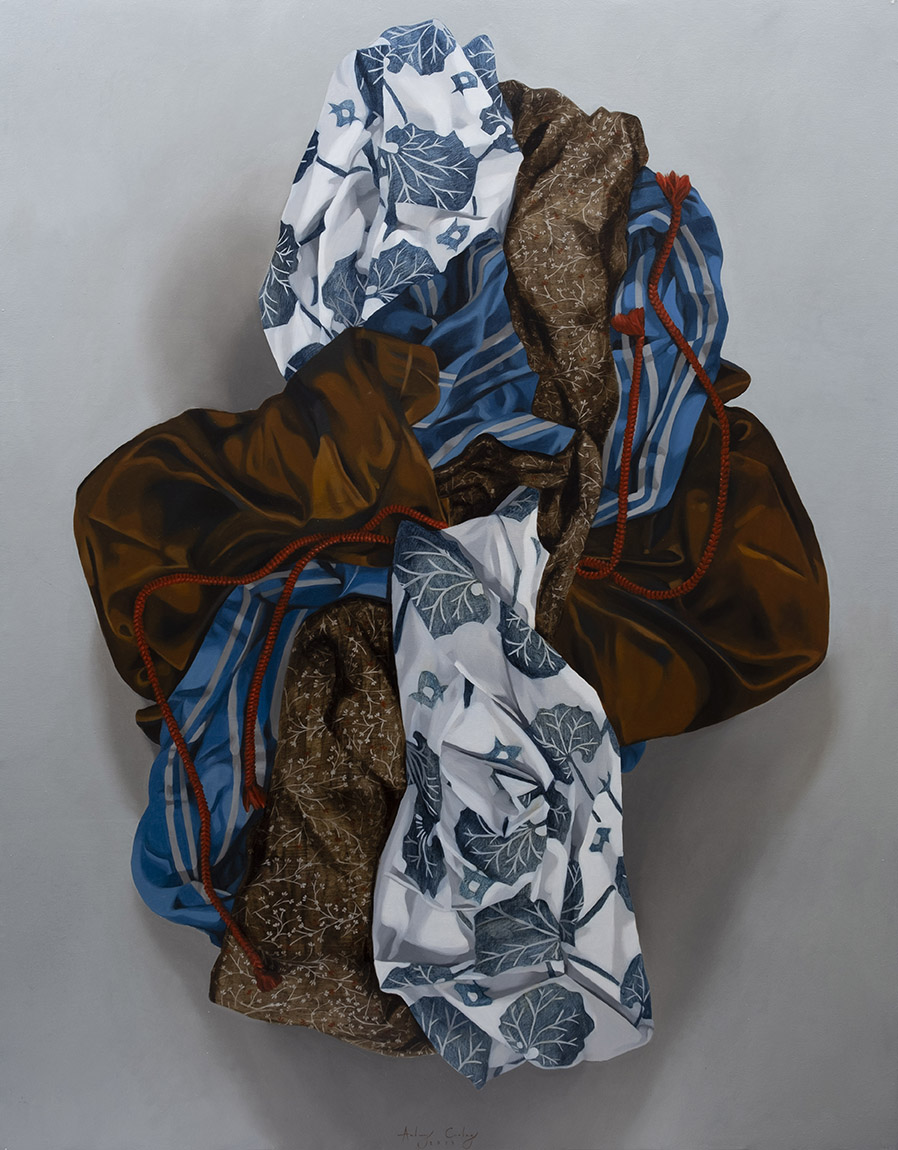
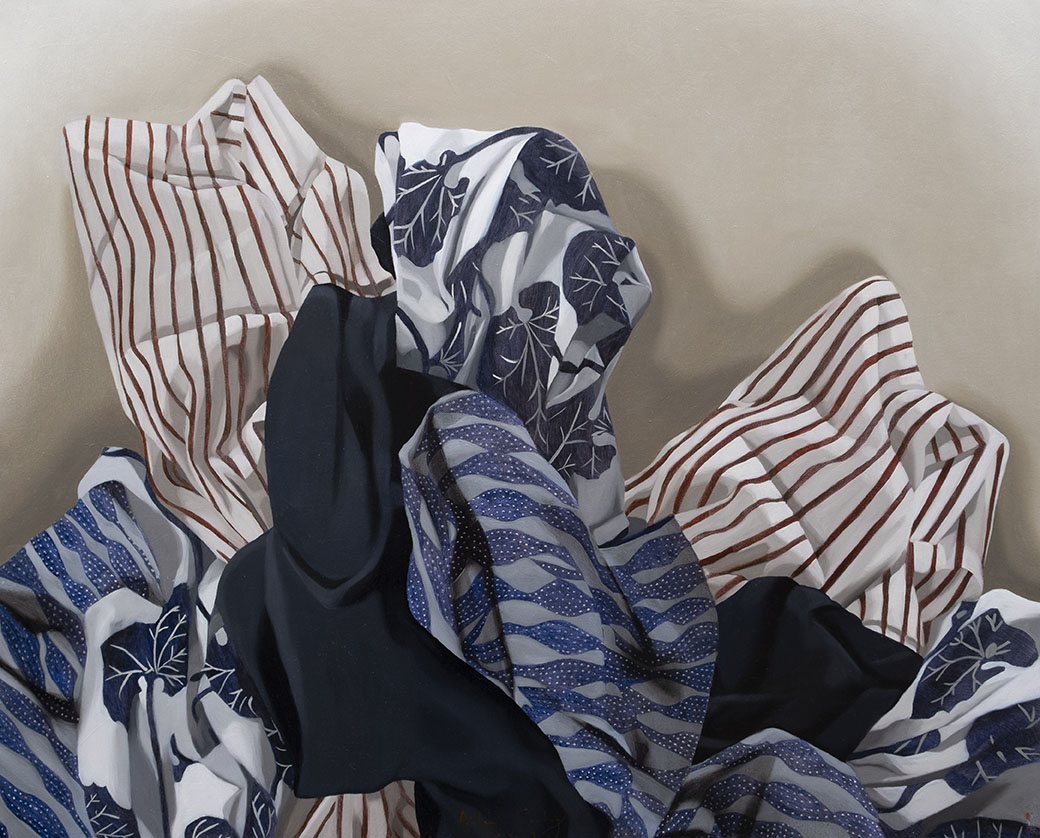
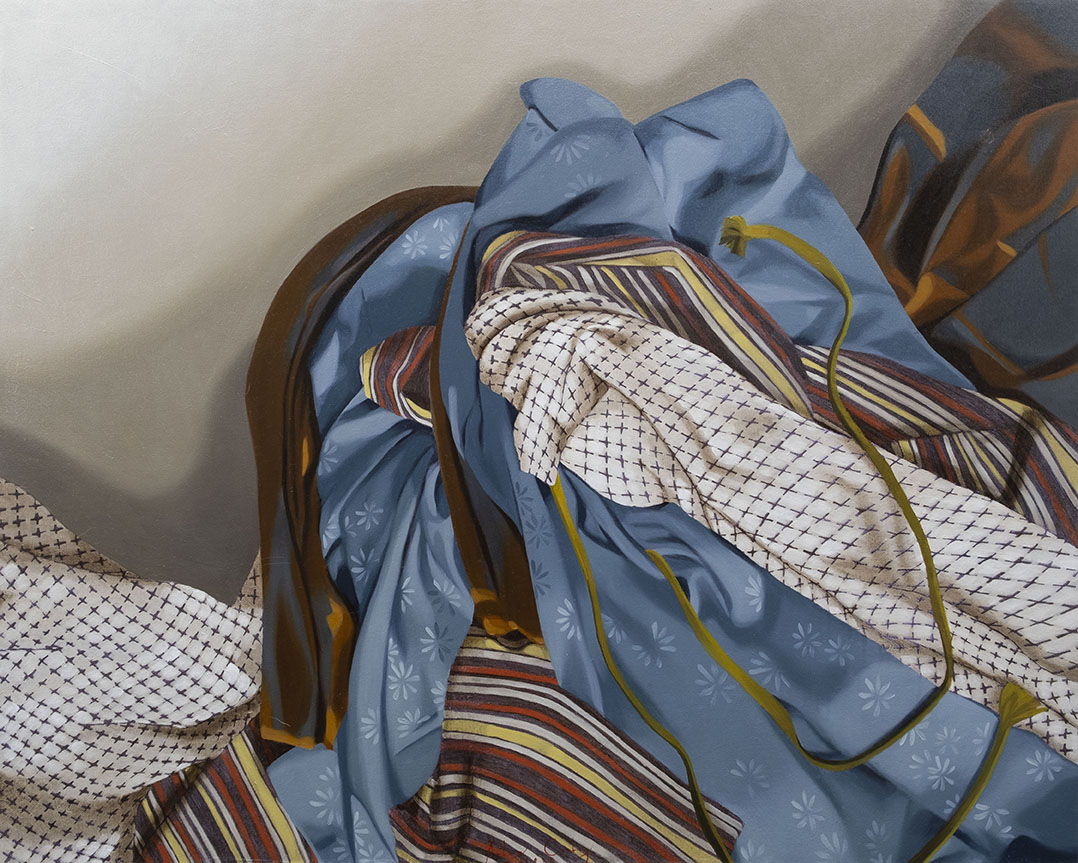
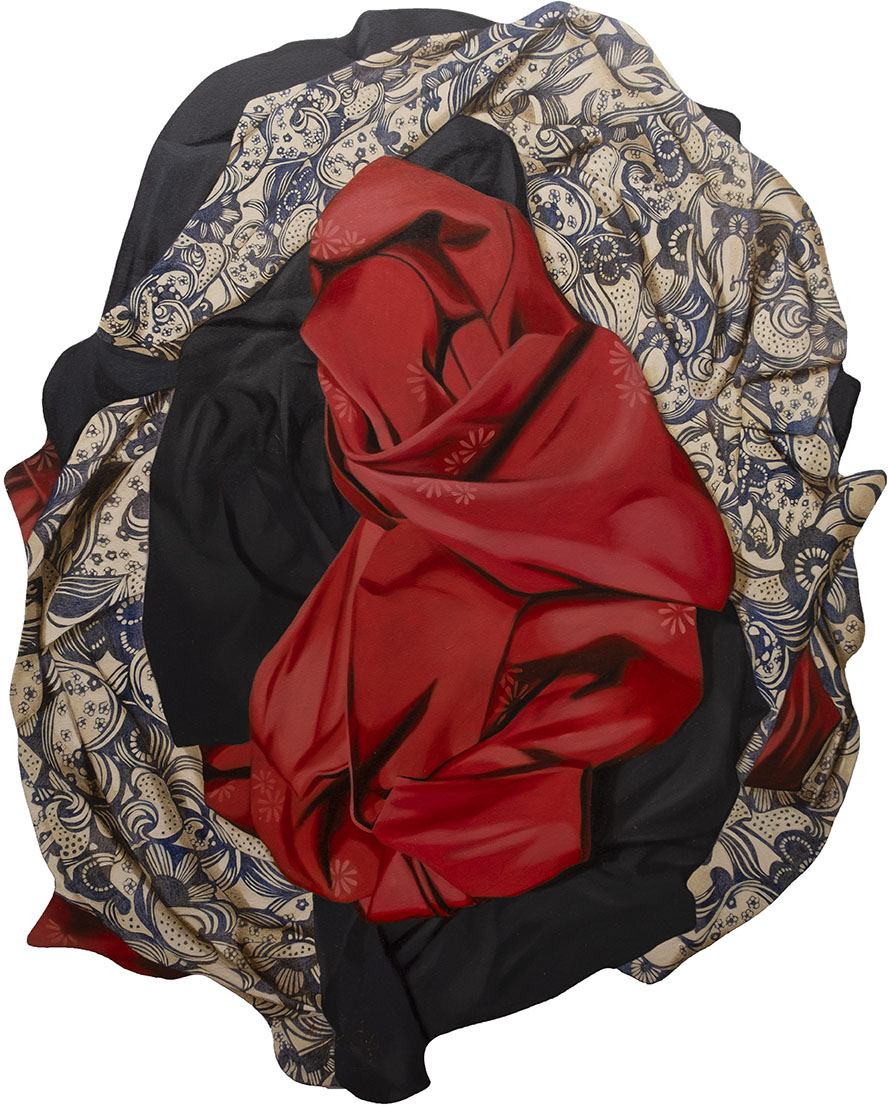
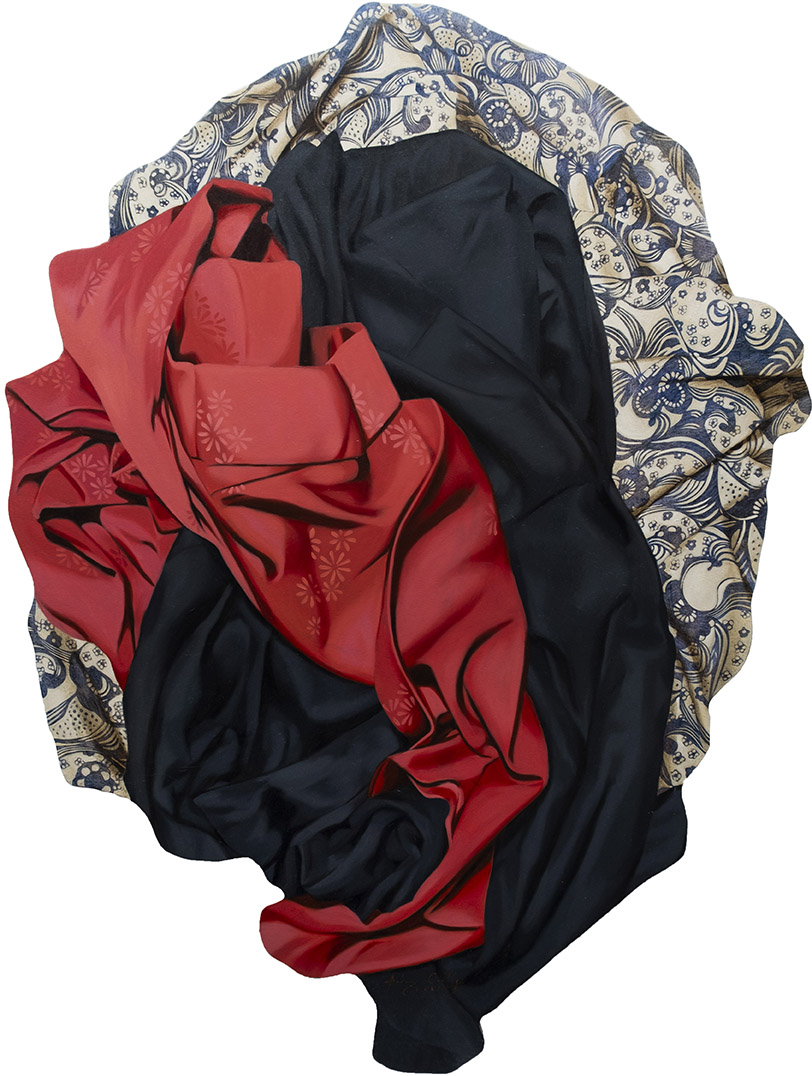
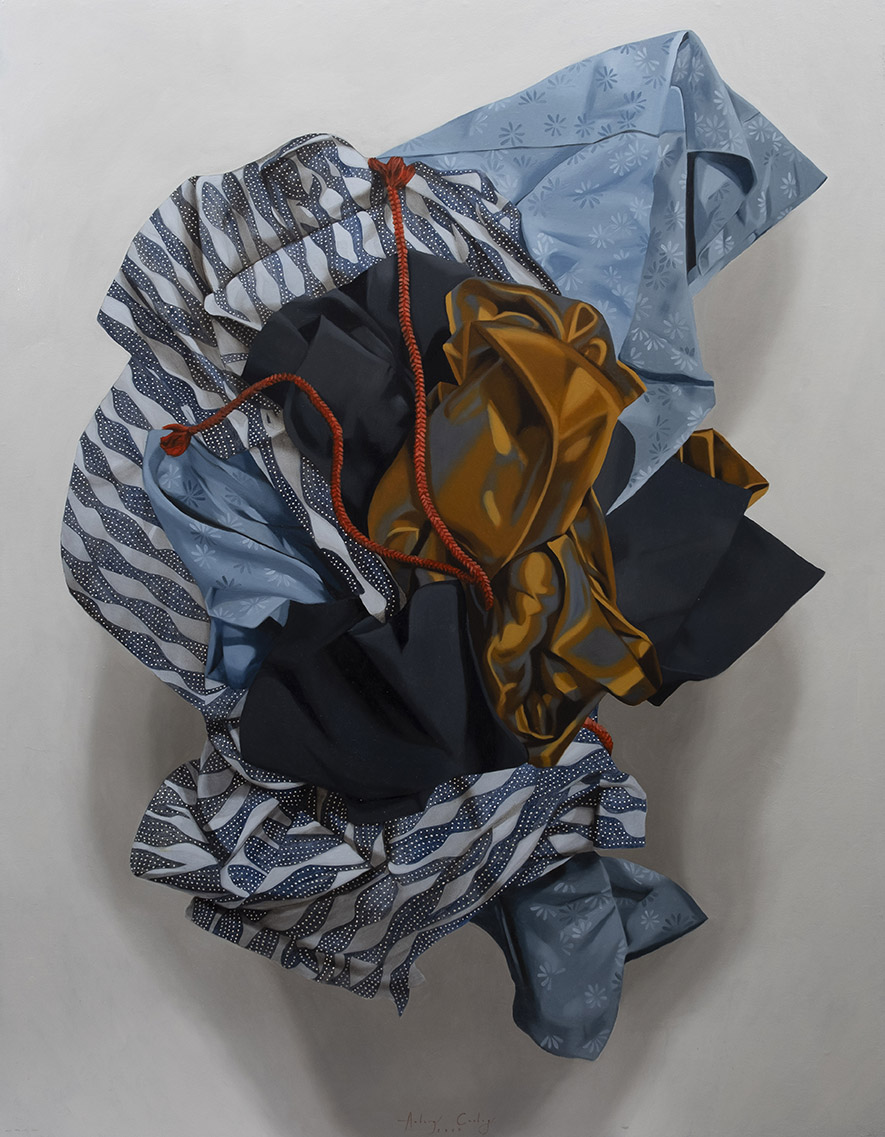
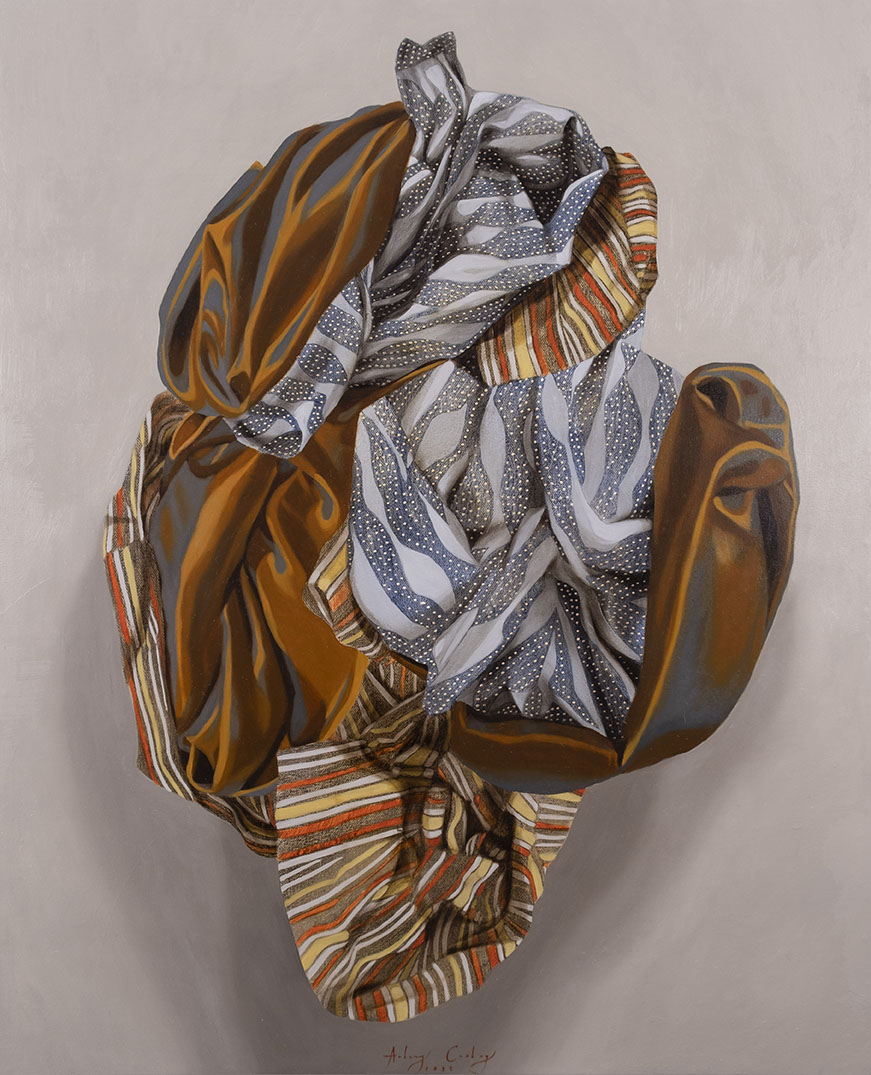
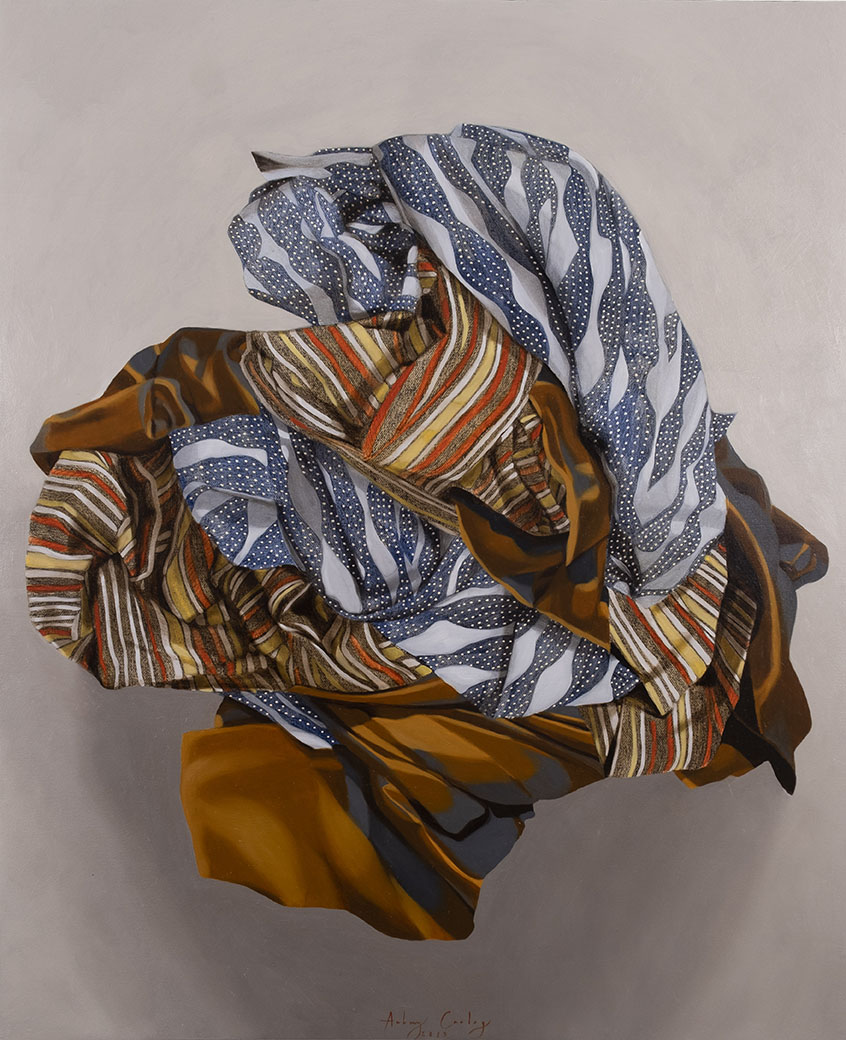
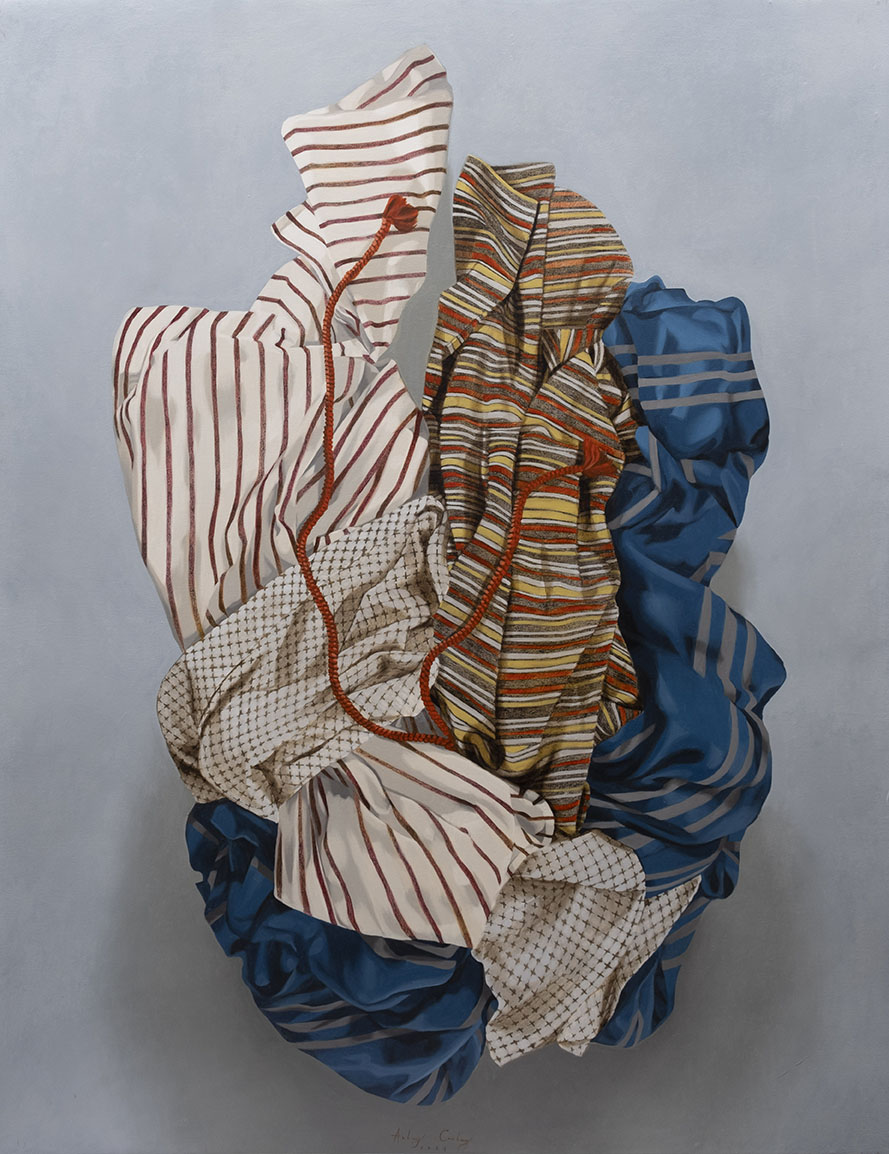
In Topographies of Becoming, Aubrey Caabay presents a compelling suite of hyperrealist fabric paintings that function as visual meditations on identity, transformation, and the sedimented weight of memory. Through her meticulous rendering of patterned cloth—crumpled, suspended, or folded—Caabay constructs a cartography of the self in flux, where the body is absent but its traces remain inscribed in the undulations of textile and texture.
The paintings are, at first glance, about fabric. But upon closer inspection, they reveal something more intimate: an archaeology of becoming. Works like Lost and Found and Weightless depict bundles of fabric suspended in midair, the drapery’s contortions evoke the inner push and pull of self-formation. Here, Caabay flattens time—folds and creases become metaphors for emotional states, historical sediment, and personal evolution. There is no center, no origin; instead, the eye is invited to meander across the surfaces, tracing line, color, and stitch like a pilgrim navigating terrain shaped by memory and displacement. In Faded and Rebirth, the palette softens, and with it, the gestures become more introspective. The folds are looser, as though surrendering to the process of unraveling. These works mark a transition from containment to release, from precision to vulnerability. The fabric becomes both skin and shield—layered and imprinted with stories untold or rewritten. Her repeated use of motifs such as florals, pinstripes, and grid patterns suggests a return to domesticity and the personal histories encoded within it. These fragments gesture toward heritage, ritual, and the often invisible labor of femininity.
The exhibition’s title—Topographies of Becoming—aptly encapsulates the artist’s project: these are psychological and emotional terrains rendered materially. They contain seemingly topographic maps, each peak and valley corresponding to a moment of joy, rupture, concealment, or clarity. But unlike maps, they offer no compass—only an invitation to dwell in uncertainty.
Caabay's practice reclaims the language of still life and transforms it into something radical: an act of resistance against erasure. In rendering the overlooked—the crumpled fabric, the invisible labor—she brings forth a nuanced discourse on identity as something continually negotiated and formed. The works for this show are not endpoints but thresholds—records of the endless, imperfect act of becoming.